
Uncategorized
How I Made $1.3 Million in Cybersecurity (With Exact Revenue Numbers)
Table of Contents
- Full Revenue Disclosure: $1.3M Breakdown & Profit Margins
- The Four Ways to Make Money: From Luck to Sacrifice
- How I Got Here: From Employee to Entrepreneur
- 3-Phase Roadmap (How You Can Do This)
- Real Talk
- Frequently Asked Questions (What You Want to Know)
- Your Move: 5-Step Action Plan Starting Today
- 100% Transparency Promise: I’ll Answer Your Questions
If you’re stuck at $50K–$100K and wondering, “How the hell do people make seven figures?” this is for you.
I’m Josh Madakor. In 2025, I made $1.3 million in cybersecurity. Not from a corporate job. Not from VC funding. And definitely not from selling a bullshit course. In this article, I’ll break down everything: my exact revenue sources, the mistakes I made, the sacrifices I didn’t expect, and the 3-phase roadmap you can follow. No fluff. No politician answers. Let’s go.
Full Revenue Disclosure: $1.3M Breakdown & Profit Margins
2025 Total Revenue: $1.3M+
Here’s where every dollar came from:
- Cyber Range: ~$100K/month average ($1.2M+ annual)
- Cybersecurity Course (legacy sales): ~$100K
- IT Course (legacy sales): Ongoing revenue
- Other revenue streams (AdSense, consulting, etc.)
I’m showing you this first because transparency builds trust. A lot of people in this space hide their numbers or inflate them. I don’t play that game.
Profit Margin Reality Check
Let’s talk honestly about how much I actually keep after expenses.
If I were a ruthless businessman who optimized everything, I could run this at 85–90% profit margins. That’s $1.17M+ of the $1.3M in my pocket. But I don’t. My actual profit margin is around 60%. Why?
- I pay my staff generous bonuses
- I keep team members long-term (not disposable hires)
- I invest in long-term infrastructure, not short-term wins
Here’s my actual expense breakdown as of August 2025:
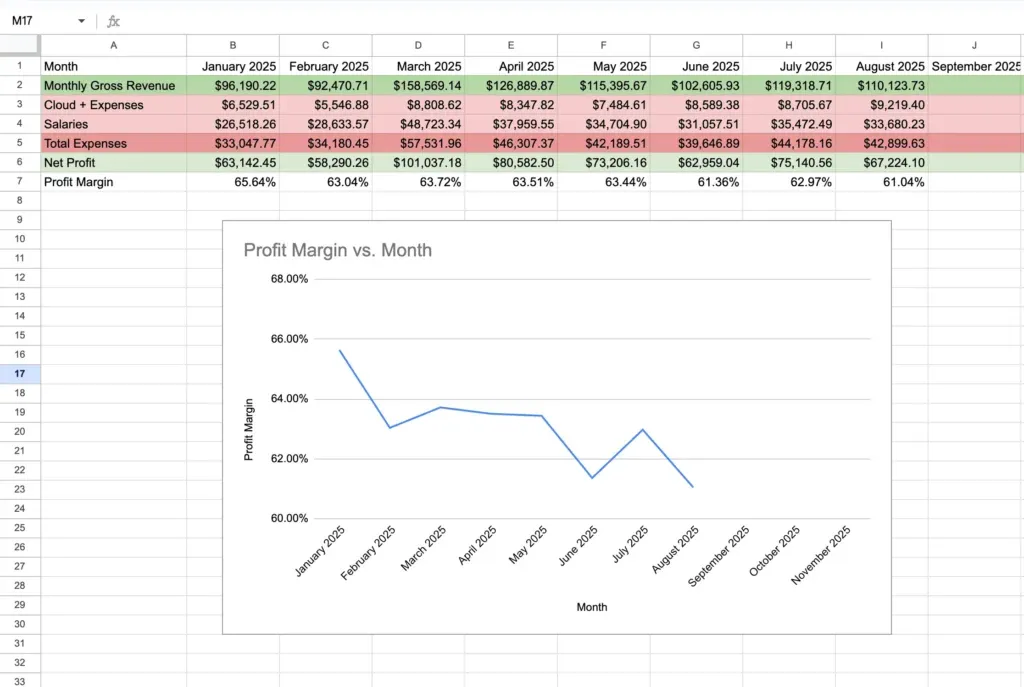
Bottom line: I keep about $780K after expenses. Still life-changing money, but I want you to know the real numbers.
The Four Ways to Make Money: From Luck to Sacrifice
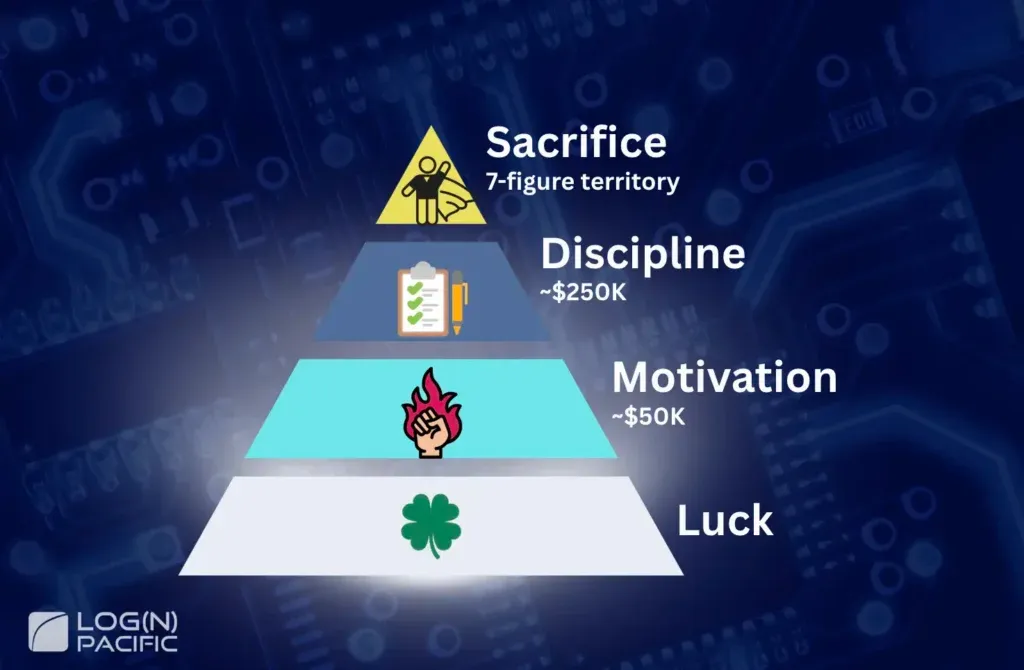
Level 1: Luck (Uncontrollable)
Were you born into a wealthy family? Middle class? Or in poverty? Here’s the truth: you didn’t choose this. I didn’t choose my starting point either. Nobody did.
You can’t control where you started. But you can control where you go from here. So acknowledge it, accept it, and move on.
Level 2: Motivation (~$50K)
This is working only when you feel like it. You work when motivated. You push when inspired. The shift to $250K? It’s learning to work even when you don’t want to.
Level 3: Discipline (~$250K)
This is working even when you don’t want to. Corporate grind can get you here. Hard work. Consistency. Following through. You can make decent money with discipline.
Level 4: Sacrifice (7-Figure Territory)
This is where shit gets real. People don’t realize this until they get here (I didn’t either), but to make seven figures, you will sacrifice something. And I don’t mean you gave up eating Twinkies or watching Netflix.
Real sacrifice means:
- Your 20-year childhood friend disappears
- You break up with your girlfriend/boyfriend
- You lose contact with certain family members (maybe even your parents)
Why does this happen?
If you grow up with people making $40K and working at Target, and you start making $150K, you’ll lose friends. If all your friends make $40K and you pull in $1.5 million? They’ll look at you like you’re Jeff Bezos. They won’t know how to interact with you. There will be weird expectations. Energy drains. Resentment.
It’s not their fault. It’s not your fault. It just happens. You can try to bring people with you on the journey. But you can’t force them. Just be prepared: You will likely lose somebody along the way.
How I Got Here: From Employee to Entrepreneur
2007–2022: The Corporate Grind
Let me tell you about my technical background so you know I’m not some lucky rich kid who lucked into success. From 2007 to 2023, I had normal IT and cybersecurity jobs. Nothing glamorous. Just steady work.
Over those 14 years, I accumulated:
- 3 degrees: Bachelor’s in IT, Bachelor’s in Computer Science, Master’s in Cybersecurity
- 14 certifications (most expired now—I only maintain CISSP so I can endorse people in my community)
- Senior-level roles in IT and cybersecurity
- Final job: Software Engineer at Microsoft, $180K/year
2022: The Turning Point & Preparation
The Turning Point: The Rule I Made
Around 2022, something started pissing me off. Objectively, I was working harder than people around me—more certifications, more studying, more output. But I couldn’t make more money or create real impact. Coworkers literally blocked my work.
If you’ve worked corporate, you know how draining that is. So I made a hard rule:
“This current job will be my last ‘normal job.’ After this, I have to do entrepreneurship in some form. I have to have my own business.”
I didn’t know what I’d do. But I forced that rule on myself.
If you want to make serious money, I think it’s important to commit, save up a cushion, and burn the bridge mentally of working a normal corporate job. It’s important to do this mentally.
By eliminating other options, you force yourself into a position where you have to succeed. For me at the time, that was really important.
Preparation Phase: Reading Business Books & Experimenting
Again, at that time, I didn’t know how to make big money. I knew I had to do business in some way, but I didn’t understand what I should do. So I read a ton of books:
- The Millionaire Fastlane (really good)
- Rich Dad Poor Dad
- F.U. Money by Dan Lok
- Atomic Habits
- The Black Swan
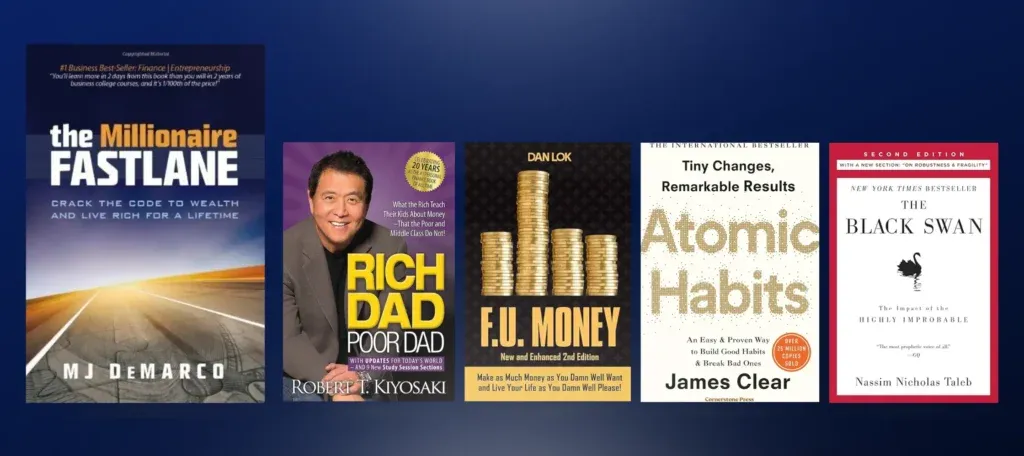
Some were really good. Some were kind of cringe. But I was trying to understand the pattern of how people actually make money.
I also experimented. I built apps. I built websites. Most of them were kinda shit. I could have made money with some of these projects, but as I worked on them, I realized “I don’t want to spend time and energy on things that can easily be destroyed.” And then it hit me.
I looked back at my career and realized “I’m abnormally good at helping people get IT jobs.” Over my 14 years of job-hopping (ADHD, easily bored, whatever), I became really good at:
- Finding jobs
- Interviewing
- Negotiating offers
And whenever I helped friends in my personal circle, they had very high success rates landing decent-paying jobs.
So I thought, “What if I scaled this?”
One thing I learned from The Millionaire Fastlane: one way to make big money is to take something valuable and scale it massively. That’s when I started the YouTube channel.
YouTube Launch + Free Consulting Days
I launched a YouTube channel teaching people how to get IT and cybersecurity jobs. I didn’t know exactly how I’d make money. I knew about AdSense. I saw other creators doing sponsorships and integrations. But I wasn’t sure. So I just made the channel anyway.
I bought a course from another YouTuber on how to do YouTube properly. I got a camera. I put in massive effort. My channel didn’t “blow up.” It just grew steadily, linearly. I’m at around 210K subscribers now.
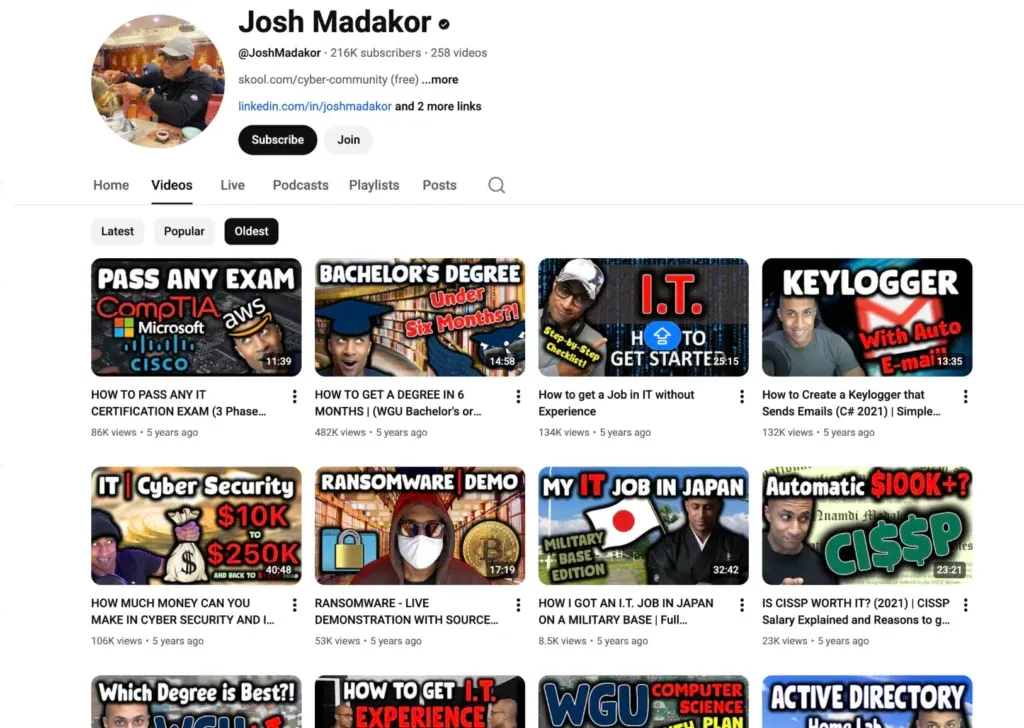
My channel is still up—all 5 years of it. You can watch the evolution from “guy with a camera” to “guy with a slightly better camera and lighting.” Progress.
But here’s what actually happened: I got massive engagement. People started asking questions in the comments. At first, I answered every single question. Not bullshit one-word answers like “Great!” or “Do this.” I did full-blown career consulting in the comment section. And people noticed. They asked more questions. I answered more. It created a feedback loop. And I hit what I call critical mass.
Late 2022–Early 2023: First Monetization
Critical Mass: The Breaking Point = Time to Charge
At some point, I physically couldn’t answer all the questions anymore. This is actually a good sign—it means you can start selling something. When demand exceeds your free capacity, that’s your green light.
I started with Patreon. People donated and asked questions on Discord. Made a little money, not much. Then I tried $200/hour consulting slots. Released 10 slots. They sold out immediately. “Okay, this is something,” I thought.
I met with all 10 people. Honestly? I was completely drained. I’m not the most social person. I love talking to my audience—I’m grateful for it. But 10 hours of consulting for $2,000 takes massive energy. Even if I scaled to 1,000 hours a year, that’s only $200K–$300K. Decent, but not much more than corporate (I had two jobs then, making $250K). Plus, these became therapy sessions. People talked about personal issues, not just IT or cybersecurity. I realized: This is not scalable. So I pivoted to an info product.
First Monetization: IT Course → $10K Month One
I looked at everything people were asking me in the meetings:
- How to get a job
- What to study
- How to build a resume
- Interview prep
I packaged all of that into an IT course that taught people how to land entry-level IT jobs. Around this time, I met another YouTuber who introduced me to the CEO of Course Careers. They offered to let me build a course under their brand. I agreed. Why?
- If they sold it (even without my effort), I’d get a cut
- If I sold it with my link, I’d get a bigger cut
- I still didn’t know what I was doing, so this felt safer
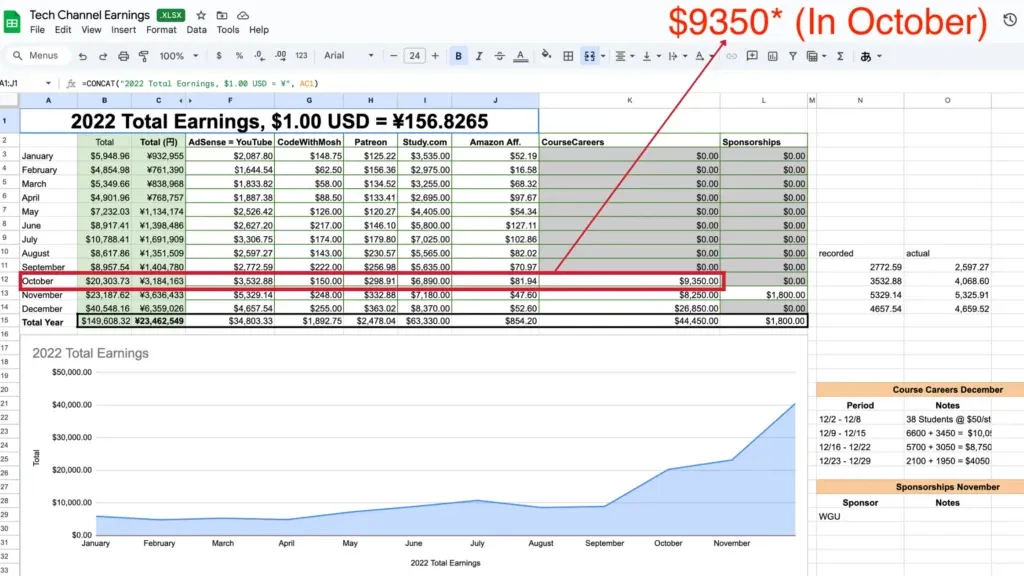
The course launched at the end of 2022 for $500. First-month revenue: $10,000
I didn’t even market it aggressively. The demand was already there. When I saw that $10K roll in while still working as a software engineer at Microsoft, I thought: “If I quit my job and put that energy into entrepreneurship, I could make way more money.” So I did.
2023: The Scaling Year
Quitting Microsoft & Launching Cyber Security Course
April 2023: I quit Microsoft. May 2023: I launched the Cybersecurity Course.
My IT course people—and my YouTube audience—kept asking for a cybersecurity version. They were asking for a specific product by name before it even existed. This is called buying pressure. When people are asking you for a specific product, that’s your signal to build it.
The Cybersecurity Course taught people to:
- Build their own Security Operations Center (SOC)
- Get attacked by real malicious actors on the internet
- Perform incident response
It was really good. I put a ton of time into it.
Annual Revenue: ~$900K Achieved
Here’s how it performed:
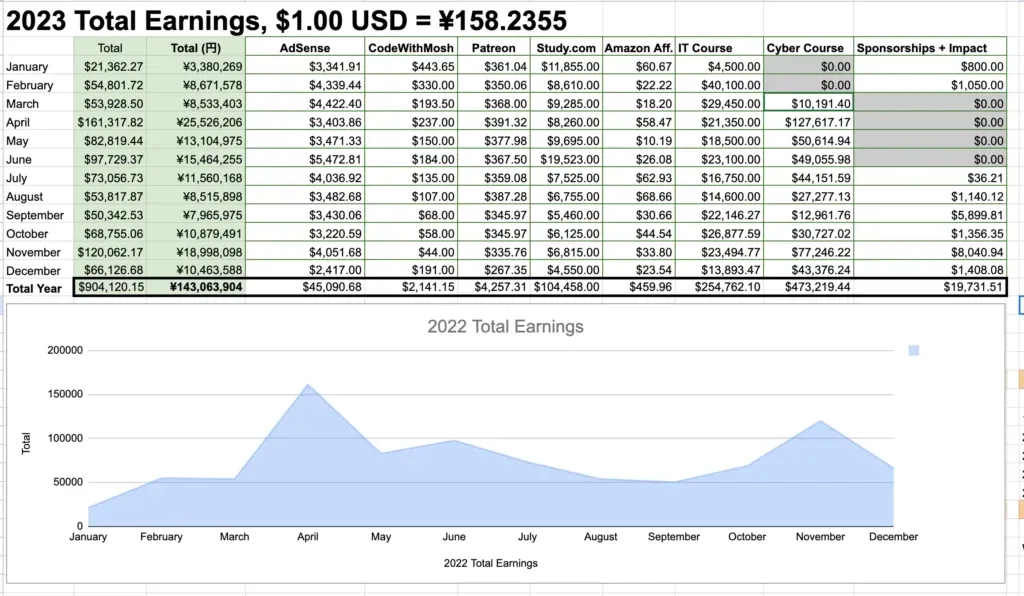
- IT Course (full year 2023): $254,762.10
- Cybersecurity Course (10 months in 2023): $473,219.44
Total 2023 revenue: ~$900K (including 4 months of Microsoft salary)
2024: The Platform Pivot
Recognizing the Course Market Problem
By mid-2024, I started noticing a problem.
Course stigma was growing. Shitty YouTubers were making low-quality courses and spending 80% of their energy on marketing instead of product quality. People got scammed. They blamed the scammers (rightfully). But it created a negative perception around all courses, including good ones. Also, competitors were trying to steal and replicate my content.
So I asked myself: “What can I build that people can’t copy or criticize?”
Strategic Decision: Intentional Sales Suppression
That’s when I decided to build Cyber Range.
Strategic Decision: While building Cyber Range, I put a big notice on my existing Cybersecurity Course landing page:
“Wait for the new platform (Cyber Range). It’s coming soon.”
This impacted sales:
- 2023 Cyber Course revenue: $430K
- 2024 Cyber Course revenue: $284K
But this was intentional. I was investing in long-term infrastructure, not short-term sales. I was building a “moat” that couldn’t be copied. This decision proved to be the right one.
Building Cyber Range
I started building something completely different from a traditional course—a full enterprise environment that would be nearly impossible to replicate.
2025: $1.3M Realized
What is Cyber Range?
Imagine getting hired at a company. You get issued credentials for all the enterprise tools you’ll use. You might get training. That’s Cyber Range—but better.
I built a real corporate work environment on Microsoft Azure:
- Tenable Vulnerability Management (enterprise license, ~$5K for 100 users)
- Microsoft Defender for Endpoint
- Microsoft Sentinel (SIEM)
- Automated onboarding system
- Multiple courses built inside (onboarding, vulnerability management, security operations, threat hunting)
When students join, they get all the credentials. They share the same environment with hundreds of other students, creating:
- Organic traffic
- Organic attack patterns
- Real-world noise (just like work)
It’s literally like being at work—but with deliberate training. I priced it at $97/month. Which is ridiculously cheap for what you get.
By 2025, here’s what happened:
- Cyber Range revenue: ~$100K/month average
- Current membership: 1,200 people (less than 1% of my 210K YouTube subscribers)
- Total 2025 revenue: $1.3M
By September 2025, I crossed $1 million for the year.
Skool.com Win & 100+ Job Placements
I also randomly won the Skool.com Q1 2025 Games. My community grew more than any other community on the platform. I got flown out to California to hang out with Sam Ovens (CEO of Skool) and speak at an entrepreneur event. In 2025, I issued 100+ offer letters to members who landed cybersecurity jobs.

Most of my 2025 revenue came from Cyber Range.
3-Phase Roadmap (How You Can Do This)
Here’s the thing: Don’t copy my tactics. Copy my thinking. You don’t need to make a YouTube channel about cybersecurity. You don’t need to build a SOC on Azure. You need to understand the pattern.
Phase 1 - Build Skills & Identify Your Strengths
Step 1: Master Something Valuable
My strength was the combination of 14 years of IT/cybersecurity experience and an abnormal talent for helping people get jobs.
Your strength: What do people repeatedly ask you for help with? Think about it. What are you abnormally good at? What do friends or coworkers come to you for? That’s your signal.
Step 2: Test at Small Scale
Before I started YouTube, I helped 5–10 friends get jobs. I tracked the results. The success rate was high.
Your version: Help 5–10 people for free. Record the results. If you’re consistently successful, you’ve found something valuable.
Step 3: Create Content as a Byproduct
Start documenting your process. YouTube, blog, LinkedIn—pick one. Don’t aim for virality. Aim for usefulness. My channel didn’t go viral. It just grew steadily because I provided real value.
Phase 2 - Reach Critical Mass
Critical Mass Signals
You know you’ve reached it when:
- You can’t answer all the questions/requests for free anymore
- People are asking you for specific products (buying pressure)
- You’re doing “free consulting” in comment sections
When this happens, it’s time to start charging.
Step 1: Test Pricing Psychology
I started with $200/hour consulting. It sold out immediately, which told me the price was too low. Don’t be afraid to charge. If you’re providing real value, people will pay.
Step 2: Build a Scalable Info Product
Build something that doesn’t require your 1-on-1 time:
- Courses
- Memberships
- Platforms
- SaaS
My rule: Build something worth $2,000. Sell it for $500. This does three things:
- You feel good about charging
- Customer satisfaction goes way up
- You get called a scammer way less (because the product is actually good)
Step 3: Quality Over Marketing
This is where most course creators fail. They spend 80% of their energy marketing a shitty product. People feel scammed. Then everyone hates courses.
Do the opposite:
- Spend 80% on product quality
- Spend 20% on marketing
If the product is genuinely great, people will tell others. That’s the best marketing.
Phase 3 - Build the Moat
What’s a “Moat”?
Something competitors can’t easily copy or criticize.
My Moat Strategy
I moved from courses (copyable) to Cyber Range (infrastructure-based). Why is this hard to copy?
- Capital-intensive: Enterprise tool licenses cost thousands
- Technical expertise: Requires deep Azure and security tool knowledge
- Network effects: Shared environment gets better with each new member
Your Moat Options
You don’t need to build infrastructure. Other moats:
- Capital-intensive: Equipment, licenses, physical infrastructure
- Expertise-intensive: 10+ years of experience others don’t have
- Network effects: Community value increases with each member
- Reputation: Track record nobody can replicate quickly
Action Steps
- Ask yourself: “What can I build that’s too hard/expensive for others to copy?”
- Invest in real value delivery (not just marketing)
- Get testimonials/results early (I had 100+ job placements in 2025)
Real Talk
If You Build a Course: Obsess Over Quality
If you decide to create a course or membership, I have critical advice for you.
There’s currently a stigma around courses. And there are legitimate reasons for it. Shitty YouTubers make low-quality products and spend 80% of their energy on marketing instead of making something good. People buy it. They feel scammed. They get angry (rightfully).
My philosophy: If you make a course, make it really, really good. I have complicated feelings about taking people’s money. So to get around that, I build something I’d pay $2,000 for and sell it for $500. This does a few things:
- I feel good about charging
- Customer satisfaction is high
- I get called a scammer way less (because the product is actually good)
Eventually, I moved away from info products 100%. But if you make one, make it excellent.
You Don’t Need Millions of Followers
Let me bust another myth. People obsess over subscriber counts.
“I need a million followers before I can make money!”
Bullshit.
Here’s the math:
- I have 210K YouTube subscribers
- Cyber Range has 1,200 members (less than 1% of my audience)
- Revenue: $100K/month
You’ve probably heard of the 1,000 True Fans principle. It’s real.
You don’t need millions of followers. You need 1,000 people who genuinely value what you do. Stop obsessing over subscriber counts. Focus on engagement and value.
Frequently Asked Questions (What You Want to Know)
Can this work in other industries?
Yes.
This pattern works in any industry:
- Car detailing businesses
- Pressure washing businesses
- Roof cleaning businesses
- Ghost kitchens (just fries)
- Real estate
- Fitness coaching
- Career coaching
- Even underwater basket weaving if you make it interesting enough
The pattern is universal:
- Get good at something
- Create content about it
- Find critical mass
- Build a scalable product
- Create a moat
Do I need to quit my job first?
No. I built my YouTube channel while working at Microsoft.
The right order:
- Build a cushion (save 6–12 months of expenses)
- Test your idea as a side hustle (nights and weekends)
- Reach critical mass (demand exceeds your free capacity)
- Then quit and go all-in
Don’t jump without a parachute.
What if I don’t have technical skills?
You don’t need them. My roadmap doesn’t require technical skills. It requires:
- Solving a real problem
- Communicating the solution
- Scaling the solution
Examples of non-technical businesses using this model:
- Fitness coaching → membership platform
- Real estate expertise → deal-finding community
- Career coaching → job placement program
The fundamentals are the same.
Your Move: 5-Step Action Plan Starting Today
Here’s what you do:
1. Make a Plan (Cheap & Easy)
Use ChatGPT or Gemini to validate your idea. Find a business model that fits your skills. The plan doesn’t need to be perfect. Mediocre plans can still make you a millionaire.
2. Create Content (Build an Audience)
Pick one platform: YouTube, blog, LinkedIn. Provide value relentlessly. Don’t aim for virality. Aim for usefulness.
3. Wait for Critical Mass (The Signal)
You’ll know when:
- You can’t keep up with free requests
- People start asking for specific products
4. Build a Scalable Product (Not 1-on-1 Time)
Course, membership, SaaS, platform—something that doesn’t require your time for every transaction.
5. Execute with Discipline (The Hard Part)
Most people can’t stay consistent. Most people can’t make the sacrifice. That’s your competitive advantage. It’s not the plan that separates you from everyone else. It’s execution. So stop reading. Start building.
100% Transparency Promise: I’ll Answer Your Questions
I promised 100% transparency. If you have questions about any of this, reach out via YouTube comments or Instagram.
I’ll answer with no bullshit politician responses. Try me.
And if you’re interested in getting into cybersecurity with real enterprise tools, check out Cyber Range—the platform I grew to $100K/month.
→ Learn more about Cyber Range → Watch the full 36-minute video on YouTube
Thanks for reading. Now go execute.
Free Resources to Support Your Journey
Cyber Community (Free) — Everything you need from foundational learning to job prep, completely free: learning materials and practice exams, resume templates, portfolio building guides, interview preparation resources, and an active community for real conversations with peers on the same path.
Ready to go all-in? Check out Cyber Range — beyond what Cyber Community offers, you’ll get real workplace environment simulations, internship experience with employment verification, weekly live coaching sessions with Josh Madakor himself, and access to real resumes from people who actually got hired. Tons of career-changers with zero experience have already landed tech jobs through Cyber Range.